Top 84 Ways of Going Greener at Home
In many of his works, Krassimir Terziev uses the language and technology of cinema and television to investigate and comment on how their shared visual culture shapes or affects our social and poli
Constallations
Constallations: by 3G(enerations) Alix
The Official History of Net.art volume III
#0 Works and experiments with moving ASCII , ASCII audio, ASCII camera and such, are all directed towards conversions of contents between one media platform and an other, every time carefully direc
Riot

Mark Napier’s Riot is an alternative, "cross-content" Web browser.
Browser Pong
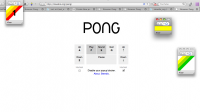
Browser Pong is a traditional Pong game played not in a browser window, but with browser windows.
What to do good? Know to shoot a semiautomatic handgun?

A flash animimation by Y0UNG-HAE CHANG HEAVY INDUSTRIES.
Jimpunk
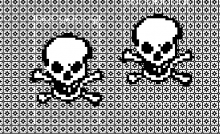
The site is a collection of animated DHTML pages, stitched together, to reload and refresh randomly into each other.
Kranx
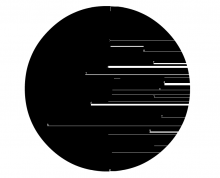
Project being ephemeral variation placed in time and net space.
A is for Apple
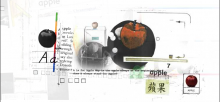
A is for Apple is a flash website project that uses the hypertext linking of interactive work to investigate a cryptography or hermeneutics of the apple.
Net-art generator
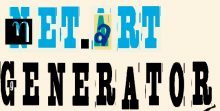
Nowadays, work is placed on a level with duty, compulsion, obedience, conformity, monotony and exploitation, but scarcely with a 'practice of creative enjoyment' of (Negri/Hardt).
Mazecorp
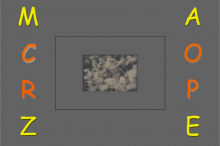
Mazecorp \Since 1999, the work titled "Mazecorps" is reflecting a maze-like construction which refers to the possible relationships between cinema, poestry, and networking.
88 Constellations for Wittgenstein: (to be played by the left hand)
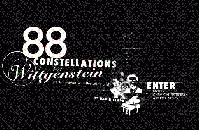
David Clark: “88 Constellations for Wittgenstein (to be played with the Left Hand) is an interactive, non-linear net.art piece that explores the life and philosophy of Ludwig Wittgenstein through a
Beyond
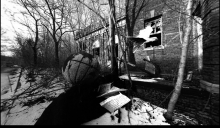
Beyond is a mysterious virtual world.
Windows 93
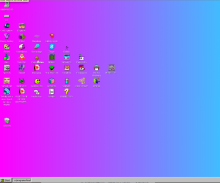
Windows 93: a playfully surreal online simulator of a computer operating system that is aesthetically similar to Windows 95.
The Secret & The Wolf
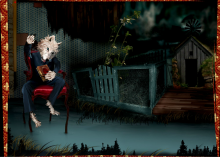
In the Secret & The Wolf we enter a world of a dandily dressed wolf and his secret diary.
SOD
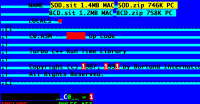
Jodi's SOD is a modification of the game Wolfenstein. You can actually attempt to play the game, but everything is scrampled.
Subculture

SUBCULTURE.com is an autistic web paradise, full of information but stuck in annoyingly repetitive patterns and pop-up screens that are hard to kill.
Tale of Tales
Entropy8Zuper!
Cachemonet
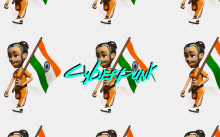
cachemonet is an exploration into the serendipitous collisions that occur between two randomly generated arrays.
The Doorman [passing]
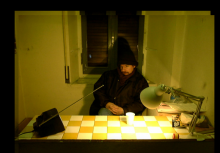
"The doorman" is an interactive, 'photo-cinematic' flash piece, created with documentary photos of the subject shot over two months.
Conclave Obscurum
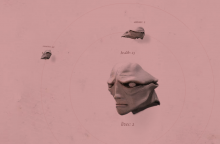
Conclave Obscurum is exclusively a private artistic project which is neither a commercial portfolio nor a collective art exhibition. |
this that now

The works of Rafaël Rozendaal are bold, clever art websites, which he sells to collectors as discrete URLs with the stipulation that they must remain public—the collector's name appears in the brow
Oculart
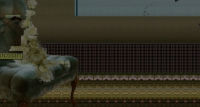
Geoffrey Lillemon (1981 USA) brings a classic romantic painting and drawing style to technology to reinterpret artistic practice.
Medialounge
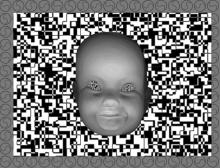
Medialounge.org (aka sign69) cybermind designs. channeling recreational synthesis in unified fields of consciousness.
The cyber-kitchen
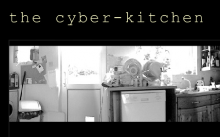
'the cyber-kitchen' is aimed at building a collaborative net.installation with its starting point in the cyber-domestic aesthetic.